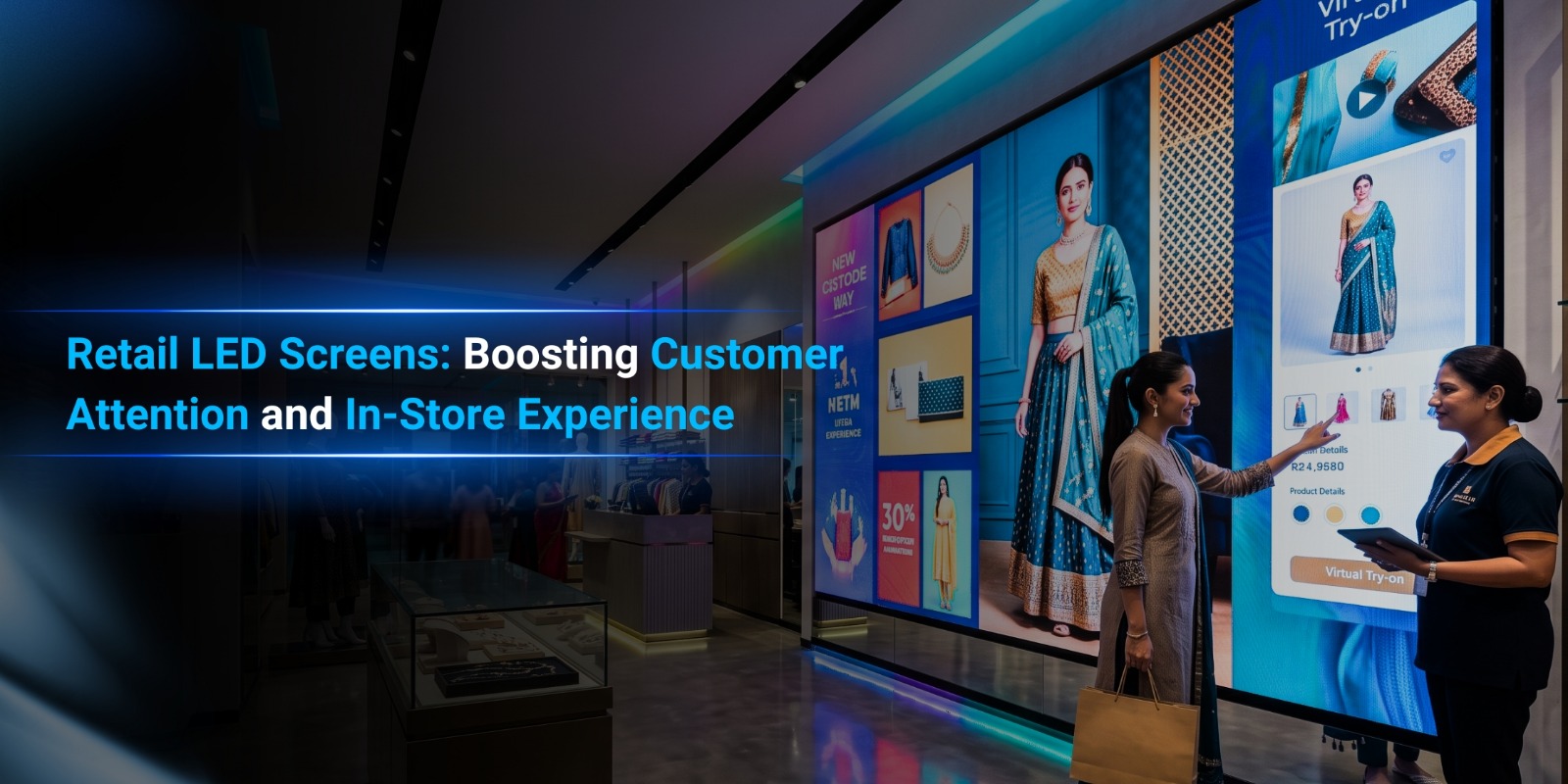
Retail LED Screens: Boosting Customer Attention and In-Store Experience
Retail has changed significantly. Customers today do not simply walk into a store, look at products, and make a purchase. They expect the environment around them to be engaging, informative, and visually appealing. This shift has made digital signage an increasingly important part of modern retail design. Retail LED Screens give stores a way to communicate with customers through movement, colour, video, product visuals, and real-time promotional content. Unlike traditional printed signs, digital displays can be updated whenever a campaign, product, offer, or season changes. From our perspective, the real value of an LED display is not simply its visual size. It is how effectively it becomes part of the customer's journey, helping a retailer attract attention, communicate a message, and create a stronger in-store experience.
Why Digital Signage Is Becoming Important in Retail
A retail store has only a limited amount of visual space. Every wall, entrance, product zone, and display area has the potential to communicate something to the customer. Traditional signage can communicate a message, but it generally remains fixed until someone physically replaces it. Digital signage changes that dynamic by allowing retailers to refresh content without changing the physical installation. This makes it particularly useful for stores that regularly introduce new collections, promotional campaigns, seasonal offers, or product launches. Instead of designing a separate printed sign for every message, retailers can use one display to communicate multiple messages throughout the day. That flexibility can make store communication more responsive while keeping the visual environment consistent.
How Retail LED Screens Attract Customer Attention
In a busy retail environment, getting noticed is often the first challenge. Customers are surrounded by shelves, packaging, posters, displays, and promotional material, so important messages can easily get lost.
A well-positioned digital display can create a clear visual focal point. Motion and changing content naturally give retailers more opportunities to draw attention towards a particular product, campaign, or area of the store.
However, we do not believe that simply making a display brighter or larger automatically makes it more effective. The content, placement, viewing distance, and timing all need to work together.
For example, a screen near an entrance may be better suited to brand messaging, while a display positioned beside a product section could focus on demonstrations, product benefits, or promotional information.
A thoughtful installation can help retailers:
- Highlight new products and collections.
- Promote seasonal campaigns and limited-time offers.
- Introduce customers to product features.
- Strengthen visual branding inside the store.
- Create attention around important retail zones.
The objective is simple: use digital content where it adds value to the shopping experience.
Creating a Better In-Store Customer Experience
The physical store is now part of a much larger customer journey. Shoppers may discover a product through social media, research it online, and then visit a store before making a decision. Retailers therefore have an opportunity to make the physical environment feel just as relevant and engaging as their digital presence. This is where Indoor LED Displays can become more than promotional tools. They can help bring online-style visual communication into a physical environment through product videos, brand stories, campaign visuals, demonstrations, and informative content.
The right application depends on the type of store. A fashion retailer could use digital visuals to introduce a new collection. An electronics showroom could demonstrate how a product works. A luxury store might use carefully designed visuals to create atmosphere and reinforce its brand identity. The important point is that the screen should have a purpose. Customers should understand why the content is there and how it contributes to their experience.
Making Retail Promotions More Flexible
Retail campaigns change constantly. A promotion that is relevant today may be replaced by another campaign next week. Seasonal collections also require retailers to update their communication quickly. This is one of the strongest advantages of digital retail displays. A retailer can schedule different content for different periods, allowing the same physical installation to support multiple campaigns. Morning, afternoon, weekend, and seasonal content can all be planned around business requirements.
This flexibility can also help retailers maintain consistency between their online and offline marketing. When a brand launches a campaign across social media, websites, and advertising channels, similar creative can be introduced inside the store. Customers then encounter a more connected brand message rather than seeing completely different communication at each touchpoint. For us, this is where digital signage becomes particularly valuable: it connects the marketing message with the physical shopping environment.
Choosing the Right Display for a Retail Store
Every retail environment has different requirements. A screen designed for a large shopping destination may not be the right choice for a compact boutique. Before selecting a display, we recommend considering the available wall or installation area, viewing distance, ambient lighting, content type, expected audience movement, and overall interior design.
Pixel pitch is also important when customers are likely to stand close to the screen. A display intended for close viewing needs to provide sufficient image detail so that visuals remain clean and comfortable to view.
For premium retail environments, an Advanced LED Display can also support the level of visual consistency required when the screen itself becomes part of the brand presentation. Maintenance should be considered at the planning stage as well. A retail display needs to remain practical to operate and maintain after installation, not just look impressive on the day it is installed.
Where LED Displays Can Add Value
Retailers can use digital displays at several points throughout the customer journey. The best location depends on what the business wants the display to achieve.
Common applications include:
- Store entrances and storefronts
- Promotional feature walls
- Product launch areas
- Fashion and lifestyle stores
- Electronics showrooms
- Automotive retail environments
- Shopping mall stores
- Luxury and premium retail spaces
- Checkout and waiting areas
- Brand experience zones
The same technology can therefore serve very different purposes. One retailer may need a display primarily for promotions, while another may use it to create a more immersive brand environment.
This is why we believe the starting point should always be the business objective rather than the hardware.
Why Customisation Matters in Retail
Absolutely none of the shop locations are ever the same. The store layouts, ceiling heights, consumer mobility, branding, product categories and visual identities can all be different. A Customized LED Display enables retailers to think of the screen more as part of the entire store design, rather than a piece of equipment in its own right. Together, size, positioning, viewing distance, resolution, cabinet arrangement and content can. This can be especially advantageous for flagship businesses and branded surroundings where every visual detail contributes to the customer experience. But customization still has to have a point. We consider this value when it helps a display fit better in the area, communicate more effectively, or create a closer relationship between technology and the identity of the store.
Using Content to Make the Display Effective
Good hardware cannot compensate for poor content. A high-quality screen can attract initial attention, but the message displayed on it determines whether that attention becomes meaningful engagement. What customers need to see and how quickly they need to get it are questions retailers need to be very thoughtful about.
Effective content may include:
- Short product demonstrations
- New collection announcements
- Seasonal campaign visuals
- Promotional messages
- Brand storytelling
- Product comparisons
- Directional information
Content also needs to be updated periodically to keep it fresh. If clients see the same message on each visit, the display can become part of the background, rather than something they actively notice.
Measuring the Impact of Digital Retail Displays
Avoid just putting up digital signage because it's shiny and new. Retailers need to know exactly what they want the display to accomplish. Depending on the campaign, firms might look at indications such as client engagement, inquiries, involvement with promotions, footfall around a particular location, dwell time and sales performance. The results will depend on a number of factors: the retail format, the message, the location, the audience and the quality of the execution. Digital signage has been studied to see how it impacts customer behavior, but it doesn't work the same in every retail context. That's why we favor an objective-led strategy. When it is obvious what a display is for, it is easy to know what content to show and how to judge its performance.
The Future of Retail Is More Experiential
The future of physical retail isn’t just about additional screens. It’s about building experiences that give customers a reason to explore, engage and remember a brand. Digital displays can help contribute to that experience by combining attractive graphics with timely communication. They can help drive product discovery, promotional storytelling, navigation and interactive experiences without forcing retailers to revamp their entire shop every time a campaign changes. We see this as an opportunity at UltraLEDdisplays to make technology more useful in the retail sector. It’s not about bombarding clients with digital stuff, but putting the correct visual communication in the proper spot.
Conclusion
Retail LED Screens can help retailers rethink how they communicate with customers inside physical stores. From promotional campaigns and product storytelling to brand experiences and visual merchandising, digital displays offer a flexible way to make retail environments more engaging. But the screen itself is only one part of the solution. Content, placement, viewing distance, store design, maintenance, and customer behaviour all influence the final experience. We believe the strongest retail installations are the ones where technology feels naturally integrated into the store. When the display supports the customer journey instead of distracting from it, it can become a meaningful part of the retail experience.
At UltraLEDdisplays, we focus on developing display solutions around the requirements of each environment, helping retailers use digital technology with a clear purpose rather than simply adding another screen to the store. If you are planning to improve your store's visual communication, explore how the right LED solution can support your retail environment and customer experience.
FAQs
Q1. Are LED displays suitable for small retail stores?
Yes. A retail LED installation does not have to be extremely large. Screen size, pixel pitch, and placement can be selected according to the available space and viewing distance.
Q2. Can retail displays be used for promotions?
Yes. Digital displays are well suited to campaigns that change frequently because retailers can update promotional content without replacing physical signage.
Q3. What should I consider before choosing an LED display?
Consider viewing distance, available installation space, ambient lighting, content requirements, screen resolution, maintenance access, and the purpose of the display.
Q4. Can LED displays improve the customer experience?
They can support the customer experience by attracting attention, communicating useful information, introducing products, strengthening branding, and creating more engaging retail environments.
Q5. How often should retail display content be changed?
There is no single schedule that works for every retailer. Content should be refreshed according to campaign changes, customer behaviour, seasonal requirements, and how frequently the audience sees the display.